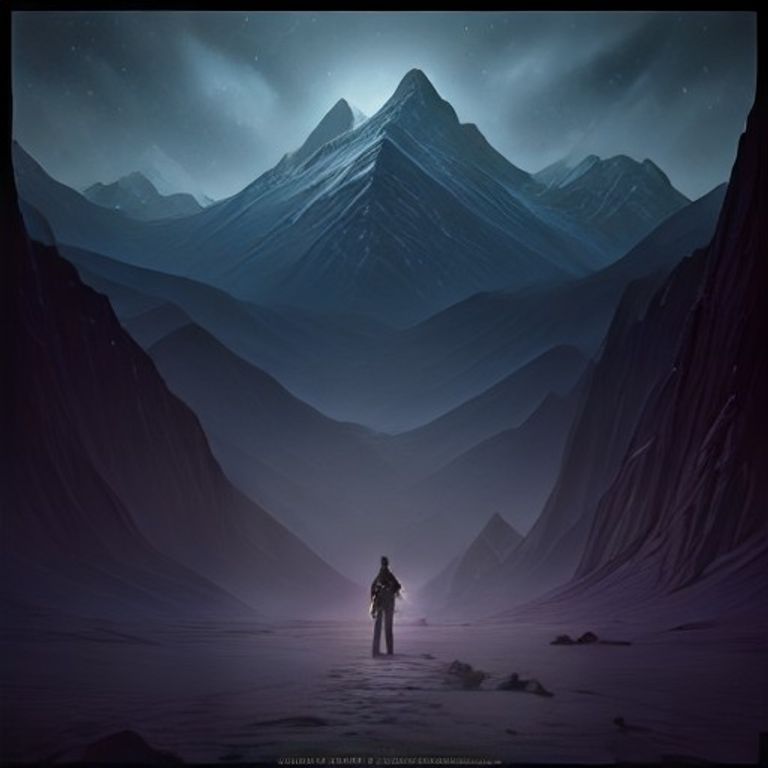
Beyond the Veil: Nicholas Roerich’s Search for a Hidden Realm
The concept of Agartha, an fabled subterranean city or network of cities, typically evokes images of a purely mythical or spiritual realm. Yet, for some dedicated seekers, it represented a tangible destination, a hidden sanctuary accessible through earthly passages. Among the most prominent figures to undertake such a quest was Nicholas Roerich, a Russian artist, philosopher, and explorer, whose ambitious Central Asian expedition of 1925-1928 transcended conventional scientific and artistic endeavors to embrace a profound esoteric search. This article examines the documentary record of Roerich’s journey, revealing how a spiritual ideal intertwined with geopolitical realities to shape one of the most intriguing expeditions of the 20th century.
Genesis of a Spiritual Odyssey: Himalayan Mysticism and Theosophical Influences
Nicholas Roerich’s fascination with inner-earth realms and hidden spiritual centers was not an isolated phenomenon but developed within a rich tapestry of Eastern mysticism and Western esotericism. By the early 20th century, concepts like Shambhala and Agartha had gained significant traction in esoteric circles, largely popularized by Theosophy. Helena Blavatsky, a co-founder of the Theosophical Society, had introduced the idea of ‘Mahatmas’ or ‘Masters’ residing in inaccessible Himalayan fastnesses, guiding humanity’s spiritual evolution. These hidden masters and their secret abodes became central to the emerging inner-earth mythos.
Roerich, deeply immersed in these currents, viewed the Himalayas and Central Asia as the spiritual heartland of the world, a repository of ancient wisdom and the potential location of such hidden spiritual brotherhoods. His earlier artistic works and philosophical writings often depicted mystical landscapes and figures, reflecting his growing conviction in the existence of these unseen forces and their terrestrial manifestations. This spiritual foundation provided the impetus for an expedition that, while outwardly a scientific and artistic undertaking, was at its core a search for a spiritual connection to these hidden realms, often identified synonymously as Shambhala, a concept frequently intertwined with Agartha.
The Central Asian Expedition: Art, Science, and the Search for Shambhala
Between 1925 and 1928, Nicholas Roerich led a large-scale expedition across Central Asia, traversing areas that included Sikkim, Tibet, Mongolia, and the Altai Mountains. Officially, the expedition aimed to conduct archaeological surveys, record local folklore, collect ethnographic data, and create a vast body of artwork depicting the region’s landscapes and cultures. However, the expedition’s spiritual undercurrent was undeniable, centered on the search for Shambhala, the mythical Buddhist kingdom often presented as a terrestrial counterpart to Agartha, a source of profound spiritual knowledge and future world transformation.
Roerich himself documented aspects of this journey in his writings. His book, ‘Altai-Himalaya: A Travel Diary’, published by Frederick A. Stokes Company in 1929, offers an account of the expedition’s day-to-day experiences, the stunning natural beauty encountered, and the cultural interactions. Within its pages, Roerich frequently alludes to the spiritual aura of the region and the enduring legends of hidden masters and sacred places. While the diary does not explicitly claim to have found a physical Agartha, it consistently frames the journey as a quest for spiritual enlightenment and the rediscovery of ancient truths. It speaks of prophecies, sacred signs, and the pervasive belief among local peoples in a hidden spiritual stronghold, often referred to as Shambhala, which Roerich believed to be a source of world renewal. The diary details the hardships and wonders, yet it remains largely descriptive of the physical journey and its cultural encounters, rather than providing concrete evidence of the esoteric quest’s success. It reveals a landscape imbued with spiritual significance, but leaves the physical manifestation of Shambhala or Agartha to the realm of belief.
Helena Roerich’s Esoteric Framing: The Inner Dimensions of the Search
Nicholas Roerich’s expedition cannot be fully understood without acknowledging the profound influence of his wife, Helena Roerich. As a spiritualist and co-creator of the Agni Yoga philosophical system, Helena served as the spiritual guide and interpreter for the expedition. Her understanding of Agartha and Shambhala leaned heavily towards an inner, energetic reality, though she also believed in its potential physical manifestation, accessible to those with heightened consciousness.
Helena Roerich’s ‘Letters of Helena Roerich, Vol. II’, published by the Agni Yoga Society in 1935, provides invaluable insight into the expedition’s deeper esoteric purpose. Her correspondence frequently discusses the ‘Masters’ of Shambhala, their guidance, and the spiritual significance of Central Asia as a focal point for humanity’s evolution. She describes Shambhala as not merely a physical place but a spiritual magnet, a center for advanced beings who oversee planetary development. For her, the expedition was an attempt to make contact with these Masters and to prepare humanity for a new era of spiritual awakening, aligning closely with the Theosophical concept of an inner government of the world. While her letters speak with certainty about the spiritual existence and influence of Shambhala’s inhabitants, they do not offer empirical evidence of the expedition having physically located Agartha or Shambhala. Instead, they reinforce the notion that the ‘search’ was as much an internal, spiritual journey as it was a geographical one, a quest to align with higher consciousness and receive spiritual transmissions. The distinction between a physical, hidden city and a spiritual state is often blurred in her writings, reflecting the esoteric nature of their pursuit.
Geopolitical Crossroads: External Scrutiny of Roerich’s Endeavors
The Roerich expedition, with its mix of artistic, scientific, and overtly spiritual goals, attracted significant attention not only from esoteric enthusiasts but also from various political powers. Central Asia in the 1920s was a hotbed of geopolitical intrigue, with the British Empire, Soviet Russia, and emerging Chinese interests vying for influence. Roerich’s movements and intentions were viewed with suspicion by intelligence agencies and diplomatic corps, who often struggled to categorize his unconventional mission.
A declassified telegram from the American Consulate General in Calcutta to the Secretary of State in Washington, D.C., dated May 13, 1927, provides a glimpse into this external scrutiny. The document discusses the difficulties faced by the Roerich Expedition in Tibet, noting their lack of proper permits and the obstacles posed by local authorities. While the telegram does not delve into the expedition’s esoteric objectives—it does not, for instance, mention ‘Agartha’ or ‘Shambhala’—it clearly illustrates how official channels perceived Roerich’s mission through a lens of diplomatic protocol and regional stability. The concerns expressed are pragmatic: travel restrictions, logistical challenges, and the potential for political complications arising from an unauthorized foreign presence in a sensitive region. It highlights the disparity between Roerich’s spiritual aspirations and the mundane, often frustrating, realities of international travel and diplomacy, underscoring that for external observers, the expedition was primarily a matter of political geography, not hidden civilizations.
The Enduring Legacy of Roerich’s Quest: Agartha’s Evolving Narrative
Nicholas Roerich’s Central Asian expedition, despite not yielding a verifiable, physical Agartha, profoundly impacted the ongoing narrative of hidden inner-earth civilizations. His journey, documented through his art, writings, and the philosophical contributions of Helena Roerich, solidified the connection between Agartha/Shambhala and the majestic, remote landscapes of the Himalayas and Central Asia. For many, Roerich’s artistic portrayals of these regions became visual representations of the very mysteries he sought. His compelling narratives about ancient wisdom, spiritual masters, and a coming new era resonated deeply within esoteric communities.
The expedition also fueled various reinterpretations and appropriations of the Agartha myth. While Roerich’s original quest was rooted in spiritual enlightenment and cultural preservation, later movements, some with more political agendas, integrated his journey into their own frameworks. This reflects a broader trend where the concept of Agartha was reinterpreted by various esoteric and political movements throughout the 20th century. The very act of a renowned figure undertaking a ‘search’ for such a place lent a degree of gravitas to the concept, moving it from pure myth to a subject of potential discovery, however interpreted.
From Hidden Sanctuary to Global Symbol: Agartha in Roerich’s Shadow
Nicholas Roerich’s Central Asian expedition stands as a significant chapter in the history of the Agartha legend. It represents a rare and ambitious attempt to bridge the gap between esoteric belief and tangible exploration, demonstrating how spiritual conviction can motivate real-world endeavors. While the expedition did not uncover a literal, physical Agartha in the conventional sense, it undeniably reinforced the legend’s presence in the collective consciousness of the 20th century. Roerich’s vivid accounts and Helena’s spiritual interpretations ensured that the concept of a hidden spiritual sanctuary in the heart of Asia would continue to inspire seekers and thinkers.
The legacy of Roerich’s quest is multifaceted. It highlights the persistent human desire to discover hidden knowledge and connect with unseen realms, illustrating how the foundational Agartha legend, with its roots in hollow-earth theory and ancient texts, continues to evolve and adapt through the actions of individuals. Rather than diminishing the myth, Roerich’s journey transformed Agartha from a purely theoretical construct into a destination for a dedicated few, enriching its narrative with a layer of ambitious exploration and spiritual dedication. The expedition itself, with its blend of art, science, and mysticism, became a symbol of the ongoing human quest for meaning beyond the conventional, positioning Agartha not merely as a mythical city, but as an enduring symbol of humanity’s yearning for a higher state of existence.
Researching declassified archives and deciphering ancient secrets requires a lot of time and resources. If you like these stories from the cradle of civilization, support the digital scribe in his further work and buy him a coffee.
Enjoyed this topic? Explore these recommended books for further reading.
Agartha: The Earth's Inner World
Ancient Egipt: Magicians of the Gods
Atlantis: Atlantis and the Ten Plagues of Egypt: The Secret History Hidden in the Valley of the Kings
Lemuria: The Lost Civilization of Lemuria: The Rise and Fall of the World's Oldest Culture
Sumer: The Sumerians: A History From Beginning to End (Mesopotamia History)
Tartaria: The One World Tartarians (Black and White): The Greatest Civilization Ever Erased From History
As an Amazon Associate I earn from qualifying purchases at no extra cost to you. Thank you for your support!