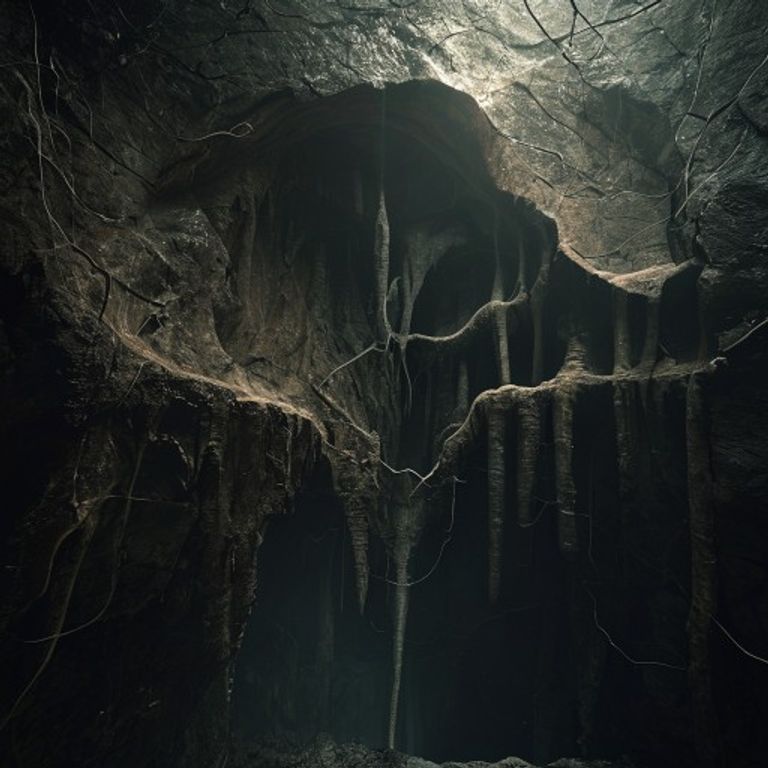
Agartha: The Earth’s Hidden Heartbeat – A Declassified Investigation
What if everything we thought we knew about our world, about the very ground beneath our feet, was merely the surface? What if, beneath the churning magma and the shifting tectonic plates, there existed another world entirely? A realm of unimaginable beauty, advanced civilization, and profound secrets? For centuries, whispers have persisted of such a place, a hidden kingdom known as Agartha. It’s a tale often dismissed as myth, a fantasy spun by dreamers and charlatans. But what if the truth, as always, is far stranger than fiction? What if the very agencies tasked with safeguarding our secrets have, for decades, been quietly investigating the impossible?
The Case File: Echoes from the Abyss
Our journey into the heart of the Earth begins not with a drill, but with ancient texts and whispered legends. The concept of a ‘Hollow Earth’ is not new. From the Vedic scriptures of India to the oral traditions of Native American tribes, stories speak of subterranean passages leading to a luminous inner world. Buddhist cosmology, in particular, reveres Shambhala, a mythical kingdom often conflated with Agartha, a spiritual sanctuary hidden from the profane world.
But it wasn’t just ancient mystics who pondered such possibilities. In the 17th century, none other than Sir Edmund Halley, the astronomer who gave us Halley’s Comet, proposed that Earth might consist of concentric spheres, each inhabited. Later, mathematician Leonhard Euler suggested a single hollow sphere with a central sun. These were scientific hypotheses, however outlandish they seem today, born from an era of boundless curiosity.
The 19th and 20th centuries saw the Agartha legend take on a more concrete, albeit esoteric, form. Helena Blavatsky, co-founder of Theosophy, spoke of a hidden brotherhood residing in a secret realm. Nicholas Roerich, a Russian artist and mystic, embarked on expeditions to Central Asia, convinced he was searching for the entrance to Shambhala. But the story truly takes a darker, more intriguing turn with the advent of the Nazi regime.
It’s an uncomfortable truth that the Third Reich, obsessed with occultism and ancient power, reportedly launched expeditions to the polar regions, driven by a bizarre belief in a Hollow Earth and the existence of Agartha. They sought not just new territories, but ancient wisdom and advanced technology, perhaps even a refuge. Admiral Richard E. Byrd, the celebrated American polar explorer, further fueled the fires of speculation. His post-WWII expeditions to Antarctica, particularly ‘Operation Highjump,’ are still debated, with conspiracy theories suggesting he encountered not just ice, but something far more profound – perhaps even an entrance to the inner world, or a hidden Nazi base within it.
So, is Agartha merely a persistent myth, a collective human yearning for utopia, or something more? This is where our investigation truly begins, by sifting through the declassified archives of the very institutions sworn to protect us from the unknown.
The Evidence: Cracks in the Official Narrative
To understand the possibility of Agartha, we must first understand how deeply the intelligence community has delved into phenomena that defy conventional explanation. While you won’t find a file explicitly titled ‘Agartha Project’ in the declassified vaults, the threads of inquiry into hidden knowledge, advanced civilizations, and inexplicable anomalies are woven throughout their records. These are not direct confessions, but rather tantalizing breadcrumbs, revealing a persistent, quiet fascination with the very edge of our understanding.
The CIA’s Psychic Spies: Sensing the Unseen
Consider the Central Intelligence Agency’s ‘STARGATE Project.’ For over two decades, from the 1970s to the 1990s, the CIA, along with the Defense Intelligence Agency (DIA), poured millions of dollars into investigating ‘remote viewing’ – the alleged ability to perceive information about distant or unseen targets using psychic means. Declassified documents, like those detailing the Stanford Research Institute’s involvement, reveal a serious, scientific effort to harness human consciousness for intelligence gathering.
One declassified report, ‘Evaluation of Remote Viewing: Research and Applications’ (CIA-RDP96-00788R001700210009-8), discusses experiments where trained individuals were asked to ‘see’ locations hundreds or thousands of miles away, often with remarkable accuracy. They weren’t just guessing; they were describing intricate details of buildings, landscapes, and even events. Now, if the CIA was willing to invest so heavily in the idea that humans could ‘see’ across continents, through walls, and into the past or future, what does that imply about the limits of their belief in what could be hidden? If one can remote view a secret facility in Russia, could one not, theoretically, remote view a hidden city beneath the Earth’s crust? It suggests an agency open to the idea that significant information, perhaps even entire civilizations, could exist beyond our conventional sensory perception.
NASA’s Deep Earth Mysteries: Gravity, Magnetism, and the Unknown
While NASA is primarily focused on space, its instruments also gaze back at our own planet, revealing its deepest secrets. The Earth’s interior remains largely a mystery, a realm we know less about than the surface of Mars. Seismic waves give us clues, but direct observation is impossible. Yet, NASA’s satellite missions have unveiled anomalies that continue to puzzle scientists.
Take, for instance, data from missions like GRACE (Gravity Recovery and Climate Experiment). These satellites map Earth’s gravitational field, revealing subtle variations. While most variations are explained by topography or water distribution, some anomalies persist, hinting at unusual density variations deep within the mantle or core. These aren’t ‘holes,’ but they are unexplained gravitational signatures. Similarly, studies of Earth’s magnetic field, which inexplicably shifts and even reverses over geological time, point to dynamic processes in the liquid outer core that we barely comprehend. What if these aren’t just geological quirks, but the energetic signatures of something more complex, more organized, deep within?
While no declassified NASA document explicitly mentions ‘Agartha,’ the agency’s continuous research into the Earth’s deep interior, its magnetic field, and gravitational anomalies, as documented in countless scientific papers and mission reports, underscores how much remains unknown about our own planet. The official narrative admits to vast gaps in our understanding of the Earth’s core, its composition, and its behavior. In these gaps, some argue, lies the space for the extraordinary.
The FBI and the Veil of Secrecy: Protecting All Secrets
The Federal Bureau of Investigation, primarily a law enforcement agency, might seem an unlikely player in the Agartha narrative. Yet, the FBI’s role extends to national security, counterintelligence, and the investigation of phenomena that could pose a threat or challenge to established order. While specific ‘Agartha’ files are non-existent, the FBI’s general approach to classified information and unexplained events is telling.
Accessing FBI files, even through Freedom of Information Act (FOIA) requests, often reveals heavy redactions, particularly concerning cases involving UFOs, unexplained disappearances, or unusual scientific phenomena that might touch upon national security. The very existence of such heavily censored documents, like those pertaining to ‘unidentified aerial phenomena’ or ‘unexplained events’ (though often linked to espionage or criminal activity), demonstrates a consistent policy of secrecy around anything that challenges the conventional understanding of reality. If a hidden civilization existed, it would undoubtedly fall under the purview of national security, demanding the highest level of classification and obfuscation. The FBI’s mandate is not just to solve crimes, but to protect the integrity of the nation, and sometimes, that means protecting its most profound secrets from public scrutiny.
Why It Matters Today: The Enduring Allure of the Unknown
Why does the legend of Agartha, despite its fantastical nature, continue to resonate in our highly technological, scientifically-driven world? Perhaps it’s a testament to the enduring human desire for wonder, for a sense of magic in a world that often feels too mundane. In an era of environmental crisis and societal upheaval, the idea of a pristine, advanced civilization hidden from our destructive tendencies offers a powerful, almost utopian, escape.
But it’s more than just escapism. The persistent whispers of Agartha, bolstered by these tangential but intriguing declassified documents, challenge our scientific dogma. They force us to confront the limits of our knowledge, to question whether our current scientific models truly encompass the entirety of reality. In a world increasingly polarized by information and misinformation, the Agartha narrative, like many alternative theories, serves as a powerful reminder that not all truths are readily apparent, and that the official narrative isn’t always the complete one.
It also taps into a deeper psychological need: the search for meaning, for a ‘lost’ wisdom that could guide humanity. If Agartha exists, what knowledge does it hold? What technologies? What philosophy? The possibility alone is enough to ignite the imagination and inspire a profound sense of curiosity.
Conclusion: Beyond the Veil
So, what are we to make of Agartha? Is it merely a beautiful myth, a collective dream of a better world, or does our planet truly harbor secrets far grander and more profound than we dare to imagine? The declassified documents, while not offering a smoking gun, paint a compelling picture of intelligence agencies consistently grappling with phenomena that defy conventional explanation – from psychic abilities to advanced aerial craft, and the very mysteries of our Earth’s hidden depths.
These agencies, funded by taxpayers, have invested heavily in understanding the ‘impossible,’ suggesting that the boundaries of reality are far more porous than we are led to believe. Whether Agartha is a literal city beneath our feet, a spiritual dimension, or a metaphor for the undiscovered potential within ourselves, its enduring power lies in its ability to challenge our assumptions, to push us beyond the comfortable confines of the known.
Perhaps the greatest secret of Agartha isn’t its location, but the profound question it poses: What else have we overlooked? What other wonders lie just beyond the veil of our perception, waiting to be discovered, not just in the vastness of space, but in the uncharted depths of our own world, and indeed, within ourselves? The investigation, it seems, has only just begun. And the heartbeat of the Earth, whether literal or metaphorical, continues to echo with untold stories.
Researching declassified archives and deciphering ancient secrets requires a lot of time and resources. If you like these stories from the cradle of civilization, support the digital scribe in his further work and buy him a coffee.
Enjoyed this topic? Explore these recommended books for further reading.
Agartha: The Earth's Inner World
Ancient Egipt: Magicians of the Gods
Atlantis: Atlantis and the Ten Plagues of Egypt: The Secret History Hidden in the Valley of the Kings
Lemuria: The Lost Civilization of Lemuria: The Rise and Fall of the World's Oldest Culture
Sumer: The Sumerians: A History From Beginning to End (Mesopotamia History)
Tartaria: The One World Tartarians (Black and White): The Greatest Civilization Ever Erased From History
As an Amazon Associate I earn from qualifying purchases at no extra cost to you. Thank you for your support!