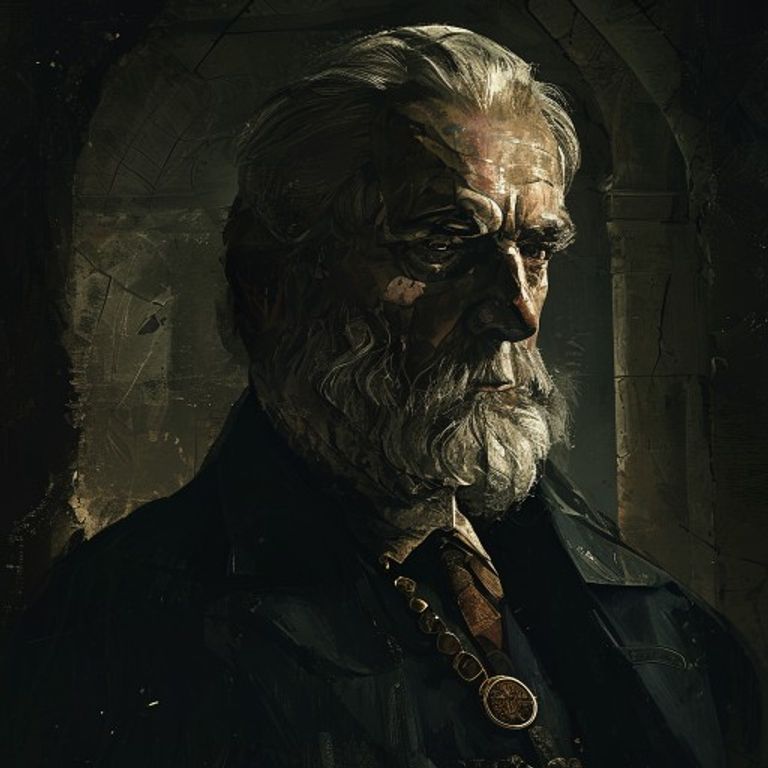
The Emergence of Mu: Churchward’s Genesis Story
The name Lemuria often evokes images of a sunken landmass, yet its journey into popular imagination is multifaceted. While the initial concept stemmed from zoological puzzles concerning lemur distribution, it was another figure, James Churchward, who vividly painted a new, distinct picture of a lost continent in the Pacific. Churchward, a British colonel and engineer, presented his grand narrative of Mu not as a zoological necessity but as the very cradle of human civilization. His claims, first published in ‘The Lost Continent of Mu, the Motherland of Man’ in 1926, captivated a generation hungry for esoteric knowledge and ancient mysteries. He asserted that during his time in India, he befriended a high-ranking Rishi, or temple priest, who initiated him into an ancient, forgotten language. This language, he claimed, allowed him to translate a set of sacred tablets – the Naacal tablets – supposedly revealing the true history of humanity, originating from a vast continent called Mu.
Churchward’s narrative positioned Mu as an advanced civilization existing some 50,000 years ago, a sprawling paradise located in the Pacific Ocean. This grand landmass, he argued, was home to 64 million inhabitants and possessed a highly developed culture, predating all known ancient civilizations like Egypt and Sumer. The people of Mu, he suggested, were the ancestors of all modern races, disseminating their knowledge and culture across the globe before their catastrophic demise. This vision differed significantly from the earlier, more scientifically grounded (though later reinterpreted by occultists) concept of Lemuria, which primarily addressed geological and biological anomalies. Churchward’s Mu was a fully fleshed-out human saga, replete with kings, priests, and intricate societal structures, offering a compelling, if unsubstantiated, alternative history of mankind’s origins.
His detailed descriptions of Mu’s geography, its golden temples, its unique flora and fauna, and the spiritual enlightenment of its inhabitants forged a powerful image in the public consciousness. This was not a scientific hypothesis but a narrative built on alleged ancient texts and personal revelation, a methodology that would later invite considerable scrutiny. Churchward’s works, including subsequent volumes like ‘The Children of Mu’ and ‘The Sacred Symbols of Mu’, cemented his particular version of a lost Pacific continent, one that would become inextricably linked, and often confused, with the broader concept of Lemuria itself, even as their foundational stories diverged.
Decoding the Naacal Tablets: A Controversial Translation
The cornerstone of James Churchward’s entire thesis rested upon the alleged Naacal tablets. According to his account, these were ancient, fire-baked clay tablets he encountered in India, which detailed the history of Mu. His friendship with a venerable Rishi supposedly granted him access to and the linguistic key for deciphering these invaluable records. Churchward claimed the Rishi taught him the dead language of the Naacals, the priestly brotherhood of Mu, who had spread their teachings to India. This allowed him to meticulously translate the symbols and narratives that described Mu’s glory, its people, and its eventual downfall. However, the exact location of these tablets, their physical existence, or any independent verification of their translation has never been produced or confirmed by any archaeological or linguistic authority. This lack of verifiable evidence remains the most significant point of contention for his work.
Churchward’s translations depicted Mu as a veritable Eden, a land of lush vegetation, advanced technology, and profound spiritual wisdom. He described a highly organized society governed by a benevolent ruler, Ra Mu, and a complex system of religious beliefs centered on the sun god, Ra. The tablets, as interpreted by Churchward, laid out not only the political and social structures of Mu but also its scientific achievements, including knowledge of cosmic energies and sophisticated engineering. He specifically detailed intricate diagrams and symbols that, he believed, represented the mother civilization’s understanding of the universe and humanity’s place within it. These detailed descriptions gave his narrative a compelling air of authenticity for many readers, even in the absence of external corroboration.
The methodology Churchward described for his translation was steeped in an almost mystical experience, far removed from standard archaeological or philological practices of the early 20th century. He recounted years of studying the symbols and narratives under the Rishi’s tutelage, gaining insights into a language that supposedly connected all ancient tongues. Critics, however, pointed out the inherent difficulties and, indeed, the impossibility of learning a completely dead language from a single, unverified source, especially one that supposedly held the key to such a vast and unknown history. The tablets, therefore, remained an enigma, existing solely within the framework of Churchward’s personal narrative, providing him with a unique and seemingly unassailable source for his radical historical claims. This singular, uncorroborated source became both the strength and the ultimate vulnerability of his entire theory.
Mu’s Cataclysm and Global Legacy
The grand narrative of Mu, as penned by James Churchward, did not culminate in a peaceful decline but in a catastrophic destruction that reshaped the world. Churchward vividly described Mu’s demise as a violent geological event, where the continent, situated primarily in the Pacific Ocean, suddenly sank beneath the waves due to the collapse of vast subterranean gas chambers. This cataclysm, he asserted, occurred approximately 12,000 years ago, resulting in immense tsunamis and earthquakes that reverberated across the globe. He claimed the sinking was not gradual but rapid, plunging the advanced civilization of Mu into the ocean in a single night of terror. This dramatic end provided a powerful, tragic climax to his story of humanity’s origins, explaining the absence of any physical remnants of this once-great empire.
Crucially, Churchward argued that before this cataclysm, Mu had already established colonies and sent out emissaries across the world, effectively seeding other budding civilizations. According to his theory, survivors from Mu’s destruction further spread their advanced knowledge and spiritual teachings to nascent cultures in Egypt, Mesoamerica (which he sometimes referred to as ‘Mayax’), India, and other regions. He interpreted various ancient symbols, architectural styles, and mythological motifs from these disparate cultures as direct evidence of Mu’s pervasive influence. For instance, the pyramids of Egypt and Central America, the sun worship practices, and certain cosmological symbols found globally were, in his view, direct inheritances from the motherland of Mu. This diffusionist perspective directly challenged conventional archaeological and anthropological theories, which typically posited independent development or more localized cultural exchanges.
This global legacy concept allowed Churchward to tie together numerous ancient mysteries under a single, overarching explanation. He believed that many myths of floods and lost lands found in cultures worldwide were distant memories of Mu’s destruction. While established archaeology emphasizes gradual cultural development and localized innovation, Churchward offered a unified, single-source origin for much of humanity’s early achievements. His work, therefore, provided a coherent, if unproven, alternative framework for understanding the connections between seemingly unrelated ancient cultures, attracting readers who found conventional explanations lacking in scope or spiritual depth. It was this vast, interconnected vision that gave Mu a lasting grip on the popular imagination.
Geological Realities vs. Churchward’s Pacific Eden
Churchward’s dramatic account of Mu’s sudden subsidence into the Pacific Ocean faces considerable challenges when viewed through the lens of modern geology. The idea of an entire continent sinking abruptly is fundamentally at odds with our understanding of plate tectonics, a theory that gained widespread acceptance in the latter half of the 20th century. Plate tectonics describes the Earth’s lithosphere as being composed of large, rigid plates that move slowly over the mantle. Continents are typically stable landmasses riding on these plates, and while they can be stretched, compressed, or rifted apart over millions of years, they do not simply vanish overnight into the ocean depths. The Pacific Ocean basin, in particular, is dominated by oceanic crust, which is thinner and denser than continental crust. This oceanic crust is constantly being formed at mid-ocean ridges and consumed at subduction zones, such as those that ring the Pacific in what is known as the ‘Ring of Fire’.
The processes of subduction and seafloor spreading occur on geological timescales, typically involving movements of a few centimeters per year. For a continent the size of Mu, as depicted by Churchward, to simply collapse and disappear would require geological mechanisms entirely unknown to science. Continents are made of buoyant granitic rock that floats higher on the mantle than the denser basaltic oceanic crust. While land bridges and smaller islands can indeed submerge due to changes in sea level or localized faulting, the complete disappearance of a large continental landmass in the manner Churchward described is geologically impossible. The very forces that create mountains and ocean trenches operate far too slowly and in fundamentally different ways to allow for such a rapid, wholesale submergence. For those interested in how the concept of lost continents first emerged from scientific speculation, the discussions around the zoological distribution of species, as seen in the early ideas concerning Lemuria’s origins, often grappled with geological explanations that predate plate tectonics.
Moreover, extensive bathymetric surveys of the Pacific Ocean floor have revealed no evidence of a sunken continent. Instead, the seafloor shows a consistent pattern of oceanic ridges, abyssal plains, and volcanic seamounts, all consistent with the processes of plate tectonics over millions of years. There are no vast, submerged continental shelves or geological signatures that would indicate the former presence of a landmass on the scale of Churchward’s Mu. The deep trenches, such as the Mariana Trench, are formed by subduction, not by a continent collapsing into a void. Thus, while the romantic notion of a lost Pacific Eden is compelling, geological evidence strongly refutes the physical possibility of its existence and sudden disappearance as described by James Churchward.
The Enduring Allure and Modern Echoes of Mu
Despite the lack of archaeological or geological corroboration, James Churchward’s narratives about Mu have exerted a remarkable and enduring influence on speculative history, New Age spirituality, and popular culture. His books, penned in a confident, authoritative style, struck a chord with readers seeking deeper meanings and alternative explanations for humanity’s past, especially during a time when scientific materialism was increasingly dominant. The idea of a wise, ancient motherland provided a spiritual foundation that resonated with various esoteric traditions and burgeoning New Age movements throughout the 20th century. Churchward’s Mu became a touchstone for those who believed in lost golden ages, psychic powers, and a grander, more mystical human lineage than conventional history allowed.
One of the most significant aspects of Mu’s legacy is its intertwining with the concept of Lemuria. While originating from distinct intellectual traditions—Lemuria from zoogeography and later occult interpretations, Mu from Churchward’s alleged ancient tablets—the two names became largely interchangeable in the popular imagination. Both represented a lost continent in the Indian or Pacific Oceans, a source of ancient wisdom and a victim of geological cataclysm. This conflation blurred their separate historical developments, making them two sides of the same coin for many enthusiasts of lost civilizations. Churchward’s detailed mythology filled a narrative void, providing specific stories and characters where the earlier Lemurian concept was more abstract, thus making his version particularly sticky in popular discourse.
The appeal of Mu also lies in its promise of hidden knowledge and suppressed truths, tapping into a common human fascination with secrets. While not framed by Churchward himself as a government cover-up, the idea of a lost, pre-Deluge civilization nonetheless hints at a history far different from the official record, feeding into broader narratives of things unknown or forgotten. This kind of speculative history, even in the absence of tangible proof, continues to inspire authors, filmmakers, and spiritual practitioners. For context, the broader fascination with lost continents and alleged suppressed information has persisted through various forms of media, illustrating the potent draw of these narratives for successive generations.
Reassessing Churchward: A Legacy of Imagination
In retrospect, James Churchward’s contributions to the discourse of lost civilizations are best understood not as historical or archaeological discoveries, but as powerful works of speculative fiction that profoundly shaped modern mythology. His books, though presented as factual accounts derived from ancient texts, ultimately lack any verifiable evidence to support their claims. The Naacal tablets, central to his entire thesis, have never been independently located or authenticated, rendering his translations untestable by scholarly methods. Furthermore, as discussed, the geological mechanisms required for a continent the size of Mu to suddenly disappear are scientifically impossible according to current understanding of Earth sciences. Therefore, from a rigorous historical or scientific perspective, Mu remains firmly in the realm of pseudohistory.
Yet, to dismiss Churchward’s work entirely would be to overlook its significant cultural impact. He was a master storyteller, weaving together exotic locales, ancient mysteries, and a compelling narrative of humanity’s origins and fall. His vivid descriptions and confident assertions resonated deeply with a public eager for alternatives to conventional explanations. Churchward’s legacy lies in his ability to capture the human imagination, contributing a rich and detailed mythology that continues to influence New Age thought, alternative history circles, and even aspects of popular culture. He provided a specific, tangible narrative for the abstract idea of a lost paradise, a pre-diluvian civilization that held the keys to forgotten wisdom.
Ultimately, James Churchward’s Mu stands as a testament to the enduring human desire to explore our origins and to believe in a grander, more mysterious past. While his methods and conclusions do not align with archaeological findings or geological realities, his narrative legacy is undeniable. It serves as a potent reminder of the distinction between documented historical inquiry, which relies on verifiable evidence and critical assessment, and the creative power of speculative narratives, which, though unproven, can profoundly shape belief systems and cultural imagination. His work reminds us that the quest for knowledge often intertwines with the allure of myth, creating stories that, whether factual or not, continue to resonate across generations.
Researching declassified archives and deciphering ancient secrets requires a lot of time and resources. If you like these stories from the cradle of civilization, support the digital scribe in his further work and buy him a coffee.
Enjoyed this topic? Explore these recommended books for further reading.
Agartha: The Earth's Inner World
Ancient Egipt: Magicians of the Gods
Atlantis: Atlantis and the Ten Plagues of Egypt: The Secret History Hidden in the Valley of the Kings
Lemuria: The Lost Civilization of Lemuria: The Rise and Fall of the World's Oldest Culture
Sumer: The Sumerians: A History From Beginning to End (Mesopotamia History)
Tartaria: The One World Tartarians (Black and White): The Greatest Civilization Ever Erased From History
As an Amazon Associate I earn from qualifying purchases at no extra cost to you. Thank you for your support!