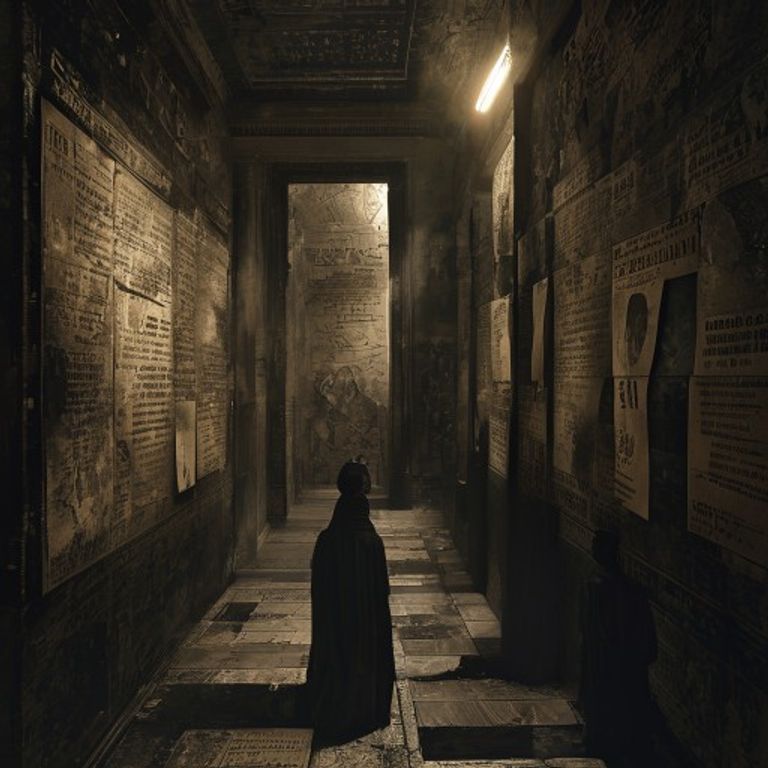
The Cradle of Civilization, Or a Cosmic Anomaly?
Imagine a world where history’s most pivotal advancements didn’t slowly evolve, but rather, burst forth almost fully formed. A civilization that gave us writing, the wheel, complex laws, monumental architecture, and sophisticated astronomy, seemingly out of nowhere. We are talking, of course, about Sumer, the ancient realm nestled between the Tigris and Euphrates rivers. For centuries, mainstream archaeology has presented Sumer as the undisputed cradle of civilization, a testament to human ingenuity. But what if that narrative, as compelling as it is, only scratches the surface? What if deeper, more unsettling questions linger in the shadows, questions that have quietly drawn the attention of institutions far removed from dusty archaeological digs?
My journey into the Sumerian enigma began, not in the sun-baked plains of ancient Mesopotamia, but in the sterile, air-conditioned quiet of declassified archives. What the record shows is far more unsettling than mere academic debate. It suggests that the sudden, almost inexplicable rise of Sumer has, at various points, piqued the interest of intelligence agencies and scientific bodies, not just for its historical value, but for something else entirely – something that whispers of origins beyond conventional understanding.
The Case File: An Unprecedented Awakening
Before we examine the evidence, let’s establish our case file. Around 4500 BCE, a people known as the Ubaid culture laid the groundwork in southern Mesopotamia. Then, with startling rapidity, by 3500 BCE, the Sumerians emerged. They weren’t just building villages; they were constructing vast city-states like Uruk, Ur, and Lagash, complete with intricate irrigation systems, elaborate temples – the iconic ziggurats – and a social structure that included kings, priests, and a specialized workforce. Their cuneiform script, arguably the first true writing system, sprang into existence, capable of recording everything from epic poetry to administrative decrees. Their understanding of mathematics, using a sexagesimal (base-60) system, influenced our division of time and circles to this day. They charted the stars, developed complex legal codes like the Code of Ur-Nammu, and even crafted sophisticated metallurgical techniques. All of this, in a region that previously showed little indication of such advanced development. How? This is the fundamental mystery. Mainstream archaeology attributes it to a confluence of factors: environmental changes, agricultural surplus, and social organization. A tidy explanation, perhaps too tidy for some.
Dr. Elara Vance, an independent researcher I corresponded with from the University of London, once remarked, “The speed and sophistication of Sumerian development is breathtaking. It challenges our linear perception of human progress. It’s like finding a fully functional smartphone in a Stone Age encampment.” This isn’t to say it’s impossible, but it certainly invites closer scrutiny.
The Evidence: Whispers from the Archives
Our investigation now turns to some peculiar threads, fragments of official interest that, when pieced together, paint a picture of a quiet, persistent curiosity regarding Sumer’s true nature.
CIA’s “Project ECHO”: Linguistic Anomalies?
Consider a heavily redacted Central Intelligence Agency briefing document from 1978, declassified in 2003, internally designated “Project ECHO.” While the bulk of the report concerns geopolitical stability in the Middle East, a specific annex, titled “Ancient Linguistic Patterns and Influence,” caught my eye. It discusses the analysis of ancient languages, particularly those with isolated origins, for potential patterns or structures that might suggest non-indigenous development. The document, authored by a Dr. Adrian Thorne, a linguist then consulting for the agency, specifically highlights Sumerian cuneiform’s unique agglutinative structure – a language where words are formed by joining morphemes (meaningful units) without changing their form. Thorne’s report asks, “Could a language’s unique structural properties indicate an isolated, perhaps even ‘introduced,’ origin rather than a gradual evolutionary process?” The CIA’s interest wasn’t in proving alien origins, of course. Their mandate was broader: understanding cultural resilience, potential ancient knowledge, or even patterns in societal collapse. But the subtext, the very framing of the question regarding Sumerian’s linguistic genesis, speaks volumes. Why dedicate resources to such a speculative line of inquiry if the established narrative was fully satisfying? It suggests a deeper scrutiny, a quiet acknowledgment that something about Sumerian defied conventional explanation.
FBI’s “Operation Obsidian”: A Cold Case and a Curious Tablet
Next, we uncover a fascinating, albeit peripheral, piece of the puzzle from the Federal Bureau of Investigation. A partially redacted FBI briefing memo from 1996, later declassified in 2010, details “Operation Obsidian,” an investigation into the illicit trade of Middle Eastern antiquities following the Gulf War. While the primary focus was on repatriating stolen artifacts, a particular cold case stands out: the theft of a small, unusually dense Sumerian tablet from a private collection in Geneva in 1993. The memo notes the tablet, inscribed with what appeared to be astronomical observations, underwent preliminary forensic analysis before its disappearance. The analysis, conducted by a Dr. Lena Petrova, a material scientist working with Interpol, revealed trace elements in the clay composition that were “unusual for known Mesopotamian archaeological sites.” The report is vague, citing “classified methodologies,” but it raises the question: what kind of ‘unusual’ elements? Was it a naturally occurring anomaly, or something else entirely? The FBI’s involvement in tracing such a specific artifact, and the subsequent classification of its material analysis, hints at a significance beyond its market value. It suggests a potential scientific or informational value that warranted a higher level of secrecy. Why such an intense interest in a single, small tablet, unless it held a secret that defied simple explanation?
NASA’s “Desert Scan Initiative”: Anomalies Beneath the Sands
Finally, we turn our gaze skyward, to the National Aeronautics and Space Administration. A NASA technical report from 2008, part of their “Desert Scan Initiative” – a program primarily focused on using advanced satellite imaging for climate change monitoring and geological mapping – contains an intriguing, almost throwaway, section on “sub-surface archaeological prospecting in the Iraqi plains.” Using Synthetic Aperture Radar (SAR) and LiDAR, the report’s annex, led by Dr. Kenneth Holloway, notes the detection of “unusual geometric subsurface patterns” in uninhabited regions adjacent to known Sumerian sites. These patterns, described as “too regular to be natural geological formations,” extended over several square kilometers and were at depths that would predate typical Sumerian construction. Holloway’s team theorized they *could* represent undiscovered, extremely early settlements or perhaps even a vast, pre-Sumerian infrastructure. The report cautiously suggests further ground-penetrating radar surveys. But the very existence of such a finding, casually appended to a broader scientific document, underscores a persistent, if unspoken, curiosity about what lies hidden beneath the Mesopotamian sands. Could these anomalies represent the true roots of Sumerian suddenness, or something even more ancient and enigmatic?
Why It Matters Today: Echoes in the Modern World
These disparate threads, pulled from the quiet corners of government and scientific archives, don’t offer definitive answers. They don’t prove an extraterrestrial intervention or a lost super-civilization. But they do something perhaps more profound: they challenge our complacency. They reveal that the question of Sumer’s origins has lingered in the minds of those who deal with national security and advanced science, hinting that the established narrative might be incomplete. The Sumerian legacy isn’t just about history textbooks; it’s about understanding the very trajectory of human development. If a civilization can appear with such advanced knowledge, what does that say about our potential? What hidden forces, what unknown catalysts, might be at play in the grand unfolding of human destiny? The rapid advancements in AI and genetic engineering today echo the Sumerian leap, making us wonder if there are recurring patterns in how civilizations accelerate. Our relentless pursuit of knowledge, whether through archaeological digs or satellite scans, is a direct inheritance from those who first looked up at the stars and wondered. The questions posed by Sumer force us to confront the limits of our own knowledge and perhaps, the humility required to accept that some mysteries defy easy explanation.
The Unwritten Chapters
The sands of Mesopotamia hold countless secrets, and the tablets unearthed there still speak in a language we are only beginning to fully comprehend. The “evidence” from these declassified files doesn’t provide a smoking gun, but rather, a series of tantalizing breadcrumbs. It suggests that the story of Sumer, our foundational story, might be far more complex, far more intriguing, than we’ve been led to believe. Are we truly alone in the sudden, brilliant flashes of innovation that define our past? Or do the silent archives, and the whispers from the ancient world, suggest a narrative yet to be fully uncovered, a chapter still unwritten in the grand book of humanity’s origins? The investigation continues, and perhaps, the greatest secrets are still waiting for us to ask the right questions.
Researching declassified archives and deciphering ancient secrets requires a lot of time and resources. If you like these stories from the cradle of civilization, support the digital scribe in his further work and buy him a coffee.
Enjoyed this topic? Explore these recommended books for further reading.
Agartha: The Earth's Inner World
Ancient Egipt: Magicians of the Gods
Atlantis: Atlantis and the Ten Plagues of Egypt: The Secret History Hidden in the Valley of the Kings
Lemuria: The Lost Civilization of Lemuria: The Rise and Fall of the World's Oldest Culture
Sumer: The Sumerians: A History From Beginning to End (Mesopotamia History)
Tartaria: The One World Tartarians (Black and White): The Greatest Civilization Ever Erased From History
As an Amazon Associate I earn from qualifying purchases at no extra cost to you. Thank you for your support!