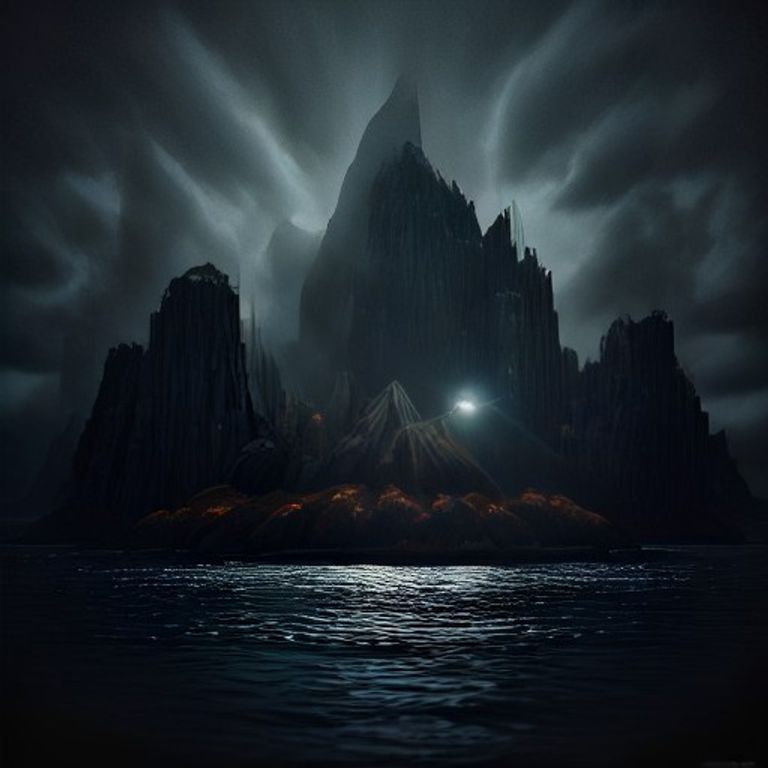
Before the concept of a sunken Pacific landmass became a recurring motif in speculative literature and alternative histories, James Churchward systematically constructed its foundational narrative. Beginning in the 1920s, Churchward published a series of books positing the existence of Mu, a primeval continent in the Pacific Ocean that he claimed was the origin point for human civilization. His work, presented as the decipherment of ancient texts, provided a detailed cosmology, history, and eventual demise for this lost world, solidifying Mu’s place in the cultural imagination as a colossal, advanced, and ultimately tragic predecessor to recorded history. This article examines Churchward’s primary publications, scrutinizing the claims within them and tracing their influence on popular culture and speculative history.
James Churchward and the Dawn of Mu’s Legend
James Churchward, a British writer and occultist, introduced the world to Mu through a series of books that blended travelogue, linguistic speculation, and esoteric interpretations of ancient symbols. He claimed to have gained knowledge of Mu during a prolonged stay in India, where an ancient Rishi, a high priest, purportedly instructed him in the reading of tablets written in the Naacal language. These tablets, Churchward asserted, contained the history of Mu, a vast continent that predated known civilizations. His work offered a complete narrative: Mu’s geography, its people, its advanced culture, its global reach, and its cataclysmic destruction. Churchward’s theories provided a compelling framework for a lost continent, distinguishing it from earlier concepts like Lemuria, which had primarily geological or biological origins. His meticulous descriptions and confident assertions resonated with an audience eager for narratives that challenged conventional historical timelines and offered alternative explanations for ancient mysteries.
Charting a Sunken World: ‘The Lost Continent of Mu’
Churchward’s most foundational work, The Lost Continent of Mu, the Motherland of Man, published in 1926, laid out his primary claims with extensive detail. In this book, Churchward describes Mu as a vast tropical continent situated in the Pacific Ocean, extending from north of Hawaii southward to the Fiji Islands and Easter Island, and stretching from the Marianas to the Pitcairn Islands from east to west. He posited that Mu was home to a sophisticated civilization of 64 million people who thrived approximately 50,000 years ago. This society, he claimed, was technologically advanced and highly spiritual, serving as the common ancestor, or ‘Motherland,’ for all subsequent major human civilizations across the globe, including those of ancient Egypt, India, and Mesoamerica. Churchward attributed many universal symbols and myths to Mu’s original teachings, asserting that its wisdom spread worldwide before its disappearance.
The book details Mu’s cataclysmic end, explaining it as the result of volcanic eruptions and earthquakes that caused the entire continent to sink beneath the ocean in a single night. Churchward recounts that this event left only isolated islands as remnants of the former landmass. While The Lost Continent of Mu presents a comprehensive narrative, it notably does not provide independent, verifiable evidence for the existence of the Naacal tablets or their claimed translation. It lacks corroborating archaeological, geological, or linguistic data from established scientific fields to support Mu’s existence or its advanced civilization. Churchward’s account relies entirely on his personal experiences and interpretations, without external validation for the continent’s history. Popular retellings often present these claims as historical facts or as based on undiscovered, yet real, ancient texts, frequently overlooking the absence of external verification for Churchward’s primary assertions.
The Progeny of a Primeval Realm: ‘The Children of Mu’
Building upon his initial assertions, Churchward continued his exploration of the lost continent in The Children of Mu, published in 1931. This subsequent volume focused on the supposed descendants of Mu and their influence on global ancient cultures. Churchward elaborated on the Muvians as a single, advanced race, highly spiritual and possessing technologies beyond their time. He asserted that Mu was not merely an isolated landmass but rather the center of a vast colonial empire, with outposts and settlements established across various continents, including Central America, Asia, and the Pacific islands, notably Easter Island. According to Churchward, the megalithic structures found in diverse parts of the world, such as those in Central America and the Pacific, were either constructed directly by Muvians or inspired by their advanced knowledge and architectural techniques.
The Children of Mu further developed the premise that Mu was the fount of all human knowledge, religious practices, and societal structures. Its survivors, scattered across the globe after the cataclysm, were said to have disseminated this ancient wisdom, influencing the development of subsequent civilizations. However, similar to his inaugural work, this book offers no external historical, archaeological, or geological evidence to substantiate the claim of Mu’s global empire or its role as the mother civilization. Churchward’s interpretations of ancient symbols and monuments are presented as direct proof of Mu’s influence, but these interpretations lack support from conventional academic research in archaeology, linguistics, or history. Popular interpretations often accept Churchward’s theories regarding Mu’s extensive colonial reach as factual explanations for various ancient sites, without addressing the lack of empirical backing for such connections. The scale of this purported submerged empire and its global shadow is a theme explored in Mu: The Submerged Empire and the Shadows of Declassified Secrets.
Cosmic Rhythms and Ancient Glyphs: ‘The Sacred Symbols of Mu’ and Beyond
Churchward’s subsequent works delved deeper into the esoteric and philosophical underpinnings of Mu. The Sacred Symbols of Mu (1933) concentrated on the symbolic language and spiritual beliefs he attributed to the Muvians. In this volume, Churchward presented a compilation of symbols, asserting their origin in Mu and their subsequent adoption by various ancient cultures worldwide. He interpreted these symbols as representing cosmic forces, creation myths, and the profound spiritual philosophy of the Muvians. Churchward argued that these symbols constituted a universal language, revealing humanity’s shared origins in Mu and its ancient wisdom. The book attempts to trace a direct lineage of religious and mystical symbols from Mu to diverse traditions such as Hinduism, Buddhism, and ancient Egyptian and Mayan beliefs, suggesting a common ancestral source for much of humanity’s spiritual heritage.
Following this, Churchward published The Cosmic Forces of Mu (1934), a two-volume work that aimed to explain the scientific principles and natural laws purportedly understood by the Muvians. This work explored concepts such as the Earth’s magnetic fields, the forces of creation, and the energetic principles that he believed governed the universe, all through the lens of Muvian knowledge. He claimed that the Muvians possessed a deep understanding of these forces, allowing them to achieve their advanced civilization. While these books expand on the intricate cosmology of Mu, they do not provide any verifiable evidence for the claimed Muvian origin of the symbols or the advanced scientific understanding described. The interpretations are entirely Churchward’s own, without corroboration from established experts in semiotics, art history, or comparative religion. Despite the lack of external verification, popular retellings frequently cite these works as proof of a global symbolic language and an ancient advanced science originating from Mu, often bypassing the absence of scholarly consensus or supporting data for such direct lineages.
Scrutinizing the Foundations: Churchward’s Narrative Claims
The core of Churchward’s elaborate narrative rests on the existence and authenticity of the Naacal tablets and his unique ability to translate them. However, a critical examination of his claims reveals a fundamental absence of external, verifiable evidence. Churchward’s books, while richly detailed, offer no independent corroboration for the tablets’ existence, their location, or any scholarly confirmation of the Naacal language itself. The narrative of learning from a high priest in a remote Indian temple is presented as a personal experience, which by its nature, resists empirical investigation. Churchward provided no photographs, carbon-dating, linguistic analyses, or any other form of documentation that would be required to validate such extraordinary claims within academic or historical disciplines.
Furthermore, the geological and archaeological assertions made by Churchward regarding Mu’s size, population, and destruction contradict prevailing scientific understanding. Mainstream geology indicates that continental landmasses do not simply sink in a single night without leaving significant, widespread seismic and oceanic evidence that would be readily observable. The concept of a vast, advanced civilization existing 50,000 years ago, pre-dating known human settlements and technological developments, also stands outside the established archaeological record. Churchward’s works, while influential in speculative history, consistently fail to provide the kind of demonstrable evidence that would allow his theories to transition from esoteric belief to accepted historical fact. This lack of official documentation and verifiable evidence is a recurring theme when discussing such historical claims, as explored in Mu: The Lost Continent’s Shadow on Secret Archives.
Enduring Echoes: Mu’s Place in Speculative History
Despite the absence of empirical support, James Churchward’s literary contributions profoundly shaped the popular understanding of Mu and its place in speculative history. His detailed and imaginative accounts provided a robust framework for a lost continent narrative, influencing subsequent generations of alternative historians, esotericists, and science fiction writers. Churchward’s vision of Mu as a technologically and spiritually advanced civilization, the ‘Motherland’ of humanity, resonated deeply with desires for hidden knowledge and explanations for ancient anomalies. His theories offered a cohesive, if unverified, answer to questions about the origins of ancient symbols, megalithic structures, and universal myths, presenting a unified source for global culture.
The enduring appeal of Mu lies partly in Churchward’s ability to weave a compelling story that connected disparate ancient phenomena under a single, grand narrative. His works served as a catalyst, transforming Mu from a vague concept into a distinct and memorable entity within the pantheon of lost civilizations. While academic archaeology and geology do not recognize Mu as described by Churchward, his books continue to be referenced in discussions surrounding pseudohistory, New Age philosophies, and various conspiracy theories about concealed ancient knowledge. Churchward’s literary legacy ensures that the name Mu persists as a powerful symbol of humanity’s imagined past and the enduring quest for a hidden, primeval source of civilization.
Researching declassified archives and deciphering ancient secrets requires a lot of time and resources. If you like these stories from the cradle of civilization, support the digital scribe in his further work and buy him a coffee.
Enjoyed this topic? Explore these recommended books for further reading.
Agartha: The Earth's Inner World
Ancient Egipt: Magicians of the Gods
Atlantis: Atlantis and the Ten Plagues of Egypt: The Secret History Hidden in the Valley of the Kings
Lemuria: The Lost Civilization of Lemuria: The Rise and Fall of the World's Oldest Culture
Sumer: The Sumerians: A History From Beginning to End (Mesopotamia History)
Tartaria: The One World Tartarians (Black and White): The Greatest Civilization Ever Erased From History
As an Amazon Associate I earn from qualifying purchases at no extra cost to you. Thank you for your support!